Forget the Beach Trip — The Happiest Moments of Your Life Are Already Happening
Every January, millions of Americans do the same thing: they open a browser tab, stare at flight prices, and dream about the trip that will finally make them feel alive again. It's a beautiful ritual. It's also, neurologically speaking, a little bit of a trap.
Don't get us wrong — vacations are wonderful. But a growing body of research in positive psychology and neuroscience suggests that the experiences generating the deepest, most lasting joy in our lives aren't the big-ticket ones. They're the small, unremarkable, easily-overlooked moments woven into ordinary days.
We dug into the science and asked Anandville readers from across the country to share the everyday moments that genuinely light them up. What we found was equal parts surprising and deeply reassuring.
1. Your Morning Coffee Ritual (Yes, Really)
There's actual science behind why that first cup hits different. Research published in the journal Psychological Science found that sensory rituals — repeated, intentional behaviors tied to physical sensations — significantly increase enjoyment of an experience. The warmth of the mug, the smell, the quiet before the day begins: your brain is registering all of it as meaningful.
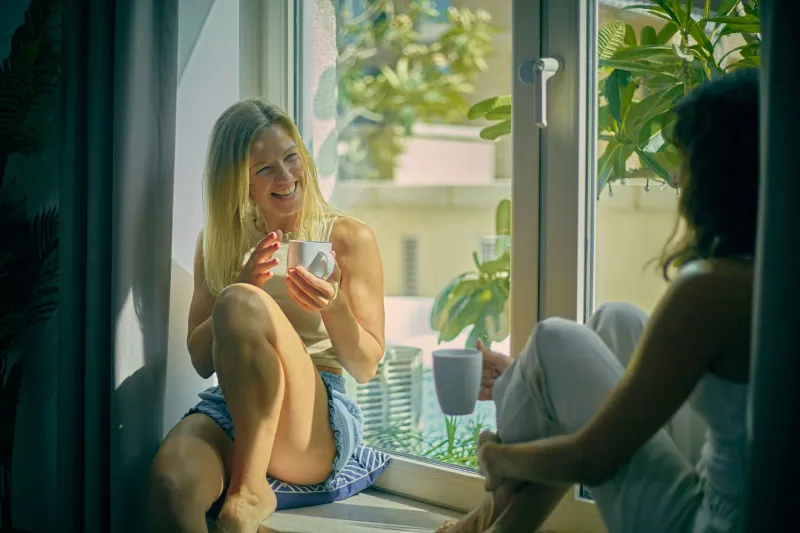
"My morning coffee is sacred," says Anandville reader Dani R., 44, a project manager from Minneapolis. "I'm up 20 minutes before my kids. I sit by the window. I don't look at my phone. That 15 minutes carries me through the whole day in a way that a weekend trip honestly doesn't."
The key word here is ritual. It's not just drinking coffee — it's the intentional, repeated act of doing it a certain way. That consistency builds what psychologists call "anticipatory pleasure," which is its own neurological reward.
Try this: Add one small sensory detail to your morning routine — a specific mug, a particular playlist, a seat by the window. Repeat it daily for a week and notice the shift.
2. Helping a Neighbor or Stranger
Prosocial behavior — doing something kind for someone else — is one of the most reliably joy-producing activities in the psychological literature. A meta-analysis from the University of British Columbia found that acts of kindness boost the giver's mood as much as, or more than, the recipient's.
And it doesn't require grand gestures. Helping a neighbor carry groceries. Holding a door. Leaving a generous tip when you can afford it. These micro-moments of connection trigger the brain's reward circuitry in ways that are measurably similar to receiving a gift yourself.
"I started leaving little notes for my mail carrier during the pandemic," shares Marcus L., 61, a retired teacher from Nashville. "Just a 'thank you, stay safe' kind of thing. The day he knocked on my door to say it meant a lot to him — I felt happier than I had in months. More than any trip I've taken."
3. Laughing With Coworkers (Even on a Bad Day)
Workplace laughter gets underrated because, well, work. But genuine laughter — not polite chuckling, actual belly laughs — releases a cocktail of feel-good neurochemicals including dopamine, endorphins, and oxytocin. A study from the University of North Carolina found that shared laughter between people strengthens social bonds and increases feelings of safety and belonging.
Those feelings, it turns out, are foundational to sustained happiness in a way that novelty (like a vacation) simply isn't.
"There's this one coworker who makes me laugh every single day," says Priya M., 31, a marketing coordinator from Houston. "I've thought about it — would I trade a week in Hawaii for her? And honestly? No. She makes Monday feel survivable. That's priceless."
4. Getting Absorbed in a Creative Hobby
Psychologist Mihaly Csikszentmihalyi spent decades studying what he called "flow" — the state of being so absorbed in an activity that time seems to dissolve. His research found that flow states are among the most reliably joyful human experiences, and they're available to almost everyone through creative hobbies: painting, cooking, knitting, woodworking, playing an instrument.
Vacations, interestingly, rarely produce flow. Sitting on a beach, while pleasant, doesn't challenge you in the way that flow requires. Your brain needs a task that's just difficult enough to demand full attention.
Try this: Pick one hobby you've been putting off and give it 30 minutes this week. No product required — just process.
5. A Really Good Conversation
Not a catch-up. Not a debrief. A real conversation — the kind where you lose track of time, say things you've never said before, and feel genuinely seen. Harvard's longest-running study on adult happiness (the Grant Study, spanning over 80 years) concluded that the quality of our relationships is the single strongest predictor of joy and longevity.
One deep conversation can recalibrate your sense of connection in ways that a solo beach trip simply cannot replicate.
"My best friend and I have a standing Sunday phone call," says Anandville reader Jess T., 38, from Denver. "We've been doing it for six years. I've missed vacations and I've been fine. If I miss that call, my whole week feels off."
6. Moving Your Body Outside
The research on outdoor physical activity is almost comically positive. A Stanford study found that a 90-minute walk in a natural setting reduced rumination (the repetitive negative thinking associated with depression) and measurably changed brain activity in the regions linked to mental illness risk. And you don't need a mountain trail — a neighborhood park counts.
The combination of movement, fresh air, and natural light hits multiple neurological systems simultaneously. It's one of the most efficient joy-delivery mechanisms available to humans, and it's free.
"I walk the same three-mile loop around my neighborhood every morning," says Tony B., 55, from Sacramento. "People think I'm boring. I think I'm the happiest person I know."
7. Noticing Something Beautiful
This one sounds almost too simple. But the practice of awe — pausing to genuinely notice something beautiful or surprising, whether it's a sunset, a piece of music, or a kid doing something hilarious in a grocery store — has been linked in multiple studies to reduced stress, increased generosity, and a greater sense of life meaning.
Dacher Keltner at UC Berkeley has spent years studying awe and describes it as an experience that temporarily quiets the ego and expands our sense of connection to something larger. It doesn't require a national park. It requires attention.
"I started taking one photo a day of something that catches my eye," says Anandville reader Carmen G., 27, from Miami. "A weird cloud. A flower growing through sidewalk cracks. My cat doing something ridiculous. I look back at those photos when I'm anxious and it genuinely helps."
The Takeaway: Joy Is Already Here
None of this means you should cancel your vacation. Vacations are fantastic and you should absolutely take them when you can. But if you're waiting for the next big trip to feel genuinely, sustainably happy — you might be missing the moments that are already doing that work.
Joy, it turns out, lives in the ordinary. It lives in the ritual, the laugh, the conversation, the walk, the moment you stop and actually look. It lives in your Tuesday.
And at Anandville, we think that's the best news there is.