When Fun Stops Feeling Fun: How to Spot the Things in Your Life That Are Faking Joy
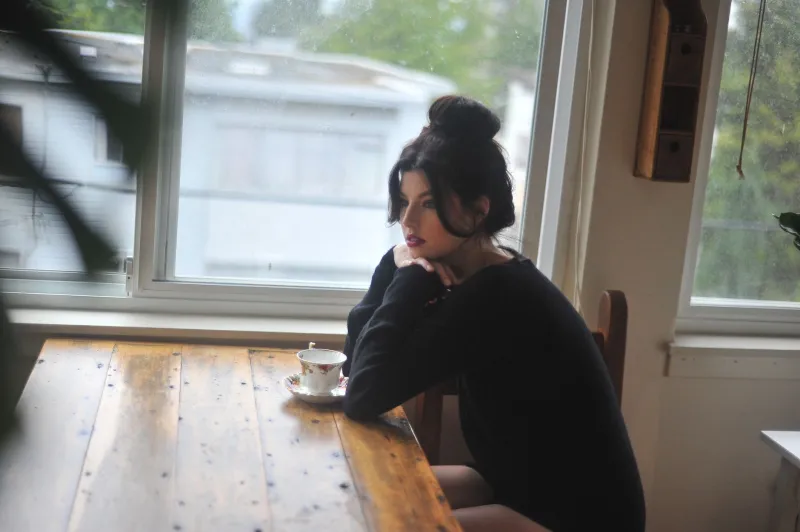
Here's a question that might catch you off guard: What if some of the things you're working hardest to keep in your life are actually the ones quietly wearing you down?
It sounds strange, right? We're pretty good at identifying stress. We know when a job is grinding us into the ground or when a friendship has turned toxic. But there's a sneakier category of life drains that almost nobody talks about — the things that are supposed to bring joy but somehow never quite deliver. The hobby you brag about but dread doing. The social tradition you'd secretly love to skip. The Sunday routine that looks great on paper and leaves you feeling oddly hollow.
Psychologists sometimes call these "obligatory pleasures" — experiences we've convinced ourselves we enjoy because we think we should, or because we once did, or because everyone around us seems to love them. And here at Anandville, we believe that real, sustainable joy starts with getting ruthlessly honest about what's actually filling your cup versus what's just taking up space in it.
The "Should" Problem
A lot of us carry around an invisible list of things that are supposed to make a good life. Weekend brunch with a big group. Annual family beach vacations. Book clubs. Wine nights. Volunteering every Saturday. Keeping up with every friend from college.
None of these things are bad. Some of them are genuinely wonderful — for certain people, in certain seasons of life. But when you're doing them primarily because they should feel good rather than because they do feel good, something important gets lost.
Take Maria, a 38-year-old teacher from Austin who spent three years coordinating a monthly dinner party for a rotating cast of friends. "Everyone always told me how amazing it was, how lucky they were to be invited," she says. "But every single month, the week leading up to it, I was anxious and exhausted. I told myself that was just the prep stress. It took me an embarrassingly long time to admit that I just... didn't actually enjoy hosting that much."
Once she scaled back to smaller, more casual get-togethers, she felt genuinely lighter. The dinner parties weren't wrong — they just weren't hers.
Why We Miss the Signs
So why is it so hard to notice when something has become a joy imposter? A few reasons:
Identity attachment. When an activity becomes part of how you describe yourself — "I'm a runner," "I'm a foodie," "I'm the person who always hosts" — it gets tangled up with your sense of self. Admitting you've outgrown it can feel like losing a piece of who you are.
Sunk cost thinking. You've invested time, money, or social capital into something. Quitting feels like admitting all of that was wasted. It wasn't — but the brain doesn't always see it that way.
Social mirroring. When everyone around you seems to love something, it's easy to assume the problem is you, not the activity. You keep trying, hoping you'll eventually feel what they're feeling.
Delayed enjoyment mythology. Some things genuinely do get better with time or practice. But we sometimes use that logic to justify sticking with things that have simply run their course.
The Honest Check-In
Here's a simple but surprisingly revealing exercise. Think of an activity, relationship, or commitment in your life that's supposed to be a source of joy. Now ask yourself these questions — and be honest:
- When this is coming up, do I feel genuine anticipation or low-grade dread?
- During the experience itself, am I present and engaged, or am I mentally running a to-do list?
- After it's over, do I feel energized or relieved that it's done?
- If nobody knew whether I did this or not, would I still choose to do it?
That last question is the real kicker. Strip away the social performance, the Instagram moment, the identity badge — and then see what's left.
If your honest answer is "I'd probably skip it," that's not a character flaw. That's information. Valuable, clarifying, liberating information.
It's Not Always About Quitting
Here's the nuance: identifying a joy imposter doesn't automatically mean you have to blow it up. Sometimes the fix is subtler than that.
Maybe you love hiking but hate the competitive, gear-obsessed group you've been going with. Maybe you genuinely enjoy cooking but the pressure of elaborate dinner parties has sucked the fun out of it. Maybe you value connection with extended family but the specific format of your annual reunion — four days in a rented house with 22 relatives — is what's draining you, not the people themselves.
In cases like these, the goal isn't elimination. It's redesign. Can you do the thing differently? Smaller? Less frequently? With different people? On your own terms?
James, a 44-year-old graphic designer from Chicago, realized he'd stopped enjoying his longtime fantasy football league — not because he didn't like football, but because the group chat had turned relentlessly competitive and mean-spirited. "I thought I was over football," he laughs. "Turns out I was just over those guys." He joined a lower-stakes league with coworkers the following season and genuinely loved it again.
Sometimes joy is still in there. It just needs a better container.
The Guilt Factor
Let's be real: even when you identify something as a joy imposter, walking away — or changing it — can feel terrifying. There's guilt. There's the fear of disappointing people. There's the worry that you're being selfish or flaky or ungrateful.
But consider this reframe: showing up halfheartedly to things that don't genuinely light you up isn't noble. It's a slow drain on your energy, and often, the people around you can tell. The friend who'd rather have two hours of your fully present attention than five hours of you mentally somewhere else will understand. The ones who can't might be worth examining too.
Protecting your genuine joy isn't selfish. It's how you show up as your best self for the people and experiences that actually matter to you.
Making Space for the Real Thing
Here's the beautiful part of this whole process: every joy imposter you identify and gently remove (or redesign) creates room for something that actually fits. Time you were spending on the dinner party you dreaded can go toward the solo cooking experiments you actually love. Energy you were pouring into a friendship that felt like work can flow toward the one that leaves you feeling seen.
Authentic joy isn't about doing more of the "right" things. It's about getting clearer on what's real for you — not your neighbor, not your Instagram feed, not the version of yourself you were ten years ago.
Start small. Pick one thing this week that you've been calling joyful but secretly suspect isn't. Sit with it. Ask the honest questions. And see what you find.
You might be surprised how much lighter life feels when joy stops being a performance and starts being the real thing.